Sunday, September 30, 2012

1.5 Billion People will be overweight by 2015. Driving innovation in the obesity sector


1.5 Billion People will be overweight by 2015.
The study is part of a series in the New England Journal of Medicine that looks at the association between sugar-sweetened beverages and obesity.
The Center recently published another study in the Journal of the American Medical Association by the New Balance Foundation Obesity Prevention Center Boston Children's Hospital suggesting that conventional low-fat diets may not be the best for weight-loss maintenance, and that reducing intake of refined carbohydrates (so called, low-glycemic diets) provide metabolic benefits and reduced risk of heart disease.
Research was funded by grants from the National Institute of Diabetes and Digestive and Kidney Diseases (R01DK073025; K24DK082730); the National Center for Research Resources to the Boston Children's Hospital General Clinical Research Center (M01RR02172), the Harvard Catalyst Clinical and Translational Science Center (UL1RR025758), and the New Balance Foundation.

Read more here: http://www.heraldonline.com/2012/09/21/4282360/new-study-shows-that-providing.html#storylink=cpy

Saturday, September 29, 2012

Obesity Treatment Devices Have Big Potential in Medical Marketplace

Approximately one-third of U.S. adults are obese, according to the Centers for Disease Control and Prevention (CDC). And while this weighty statistic does not bode well for the health of Americans, it does represent a wealth of opportunity for medical device manufacturers.
Among the few weight-loss devices that can boast brand recognition, thanks to a ubiquitous advertising campaign, is the Lap-Band adjustable gastric banding system. However, this pervasive marketing campaign was the subject of a stern warning from FDA  last month that accused several surgical centers and a marketing firm of downplaying the device's dangers, contraindications, and side effects.
Although the laparoscopically placed Lap-Band has proven successful in the market—despite the recent marketing brouhaha—various medical device manufacturers are forging a different product design path for next-generation devices by offering a nonsurgical, nondrug obesity treatment.  
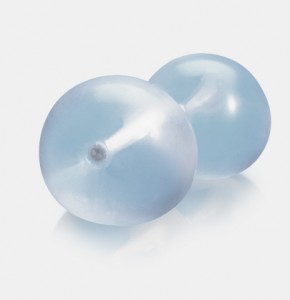
ReShape Duo ProductReShape Medical (San Clemente, CA), for example, has developed what it claims on its Web site is the "first and only nonsurgical, dual-balloon treatment for the millions who want a fast track to weight loss, without the risks of surgery or side effects of drugs." Designed to take place in a 30-minute outpatient procedure, placement of the ReShape Duo entails the insertion of an endoscope through the mouth and into the stomach. Then, the uninflated balloons are positioned in the stomach via a guidewire, after which the balloons are inflated with saline.
Orange County, Ca is becoming a hub for medical devices in Obesity, Ophthalmology, Cardiovascular and other therapeutic areas.
Onciomed, Inc based in Irvine, CA is working on a minimally invasive laproscopic procedure, which is reversible and  can reduce the dependance of anti diabetic medicaltion the procedure takes about 45 min. The company is working on its Series A funding. The company claims it has reached mile stones that other competitors have reached at Series B funding. This could be a great advantage for investors. The product has great potential said on of the ASMBS international faculty surgeons. Product is under clinical evaluation outside USA.
Soon there will be many "Obesity Clinics" around . Just like opthalmologist, are now called "Lasik Surgeons"
bariatric surgeons will be called  "Obesity Surgeons"

Medtronic Gets CE Mark for Corve Valve Technology

MINNEAPOLIS, Sept. 26 -- Medtronic, Inc. (NYSE: MDT) announced it has received CE (Conformite Europeenne) Mark for its Medtronic CoreValve(R) Evolut(TM) 23mm valve, its latest self-expanding transcatheter aortic valve implantation (TAVI) system. The new valve incorporates technology that optimizes fit, thereby promoting sealing between the prosthetic valve and the native valve (TruFit Technology). The Medtronic CoreValve System is currently limited to investigational use in the United States. They just started clinical trial activities in the US.

Medtronic had acquired CoreValve for about $700 Million. CoreValve set the precedent that OUS clinical study is really valuable. CoreValve's technology was in the aortic valve market which is approx a $4 B market worldwide.

With the introduction of the CoreValve Evolut valve, Medtronic can now treat the broadest range of TAVI patient valve sizes (annulus diameters from 18mm to 29mm).

The Medtronic CoreValve System received CE (Conformite Europeenne) Mark in 2007. Medtronic now offers TAVI in four valve sizes (23mm, 26mm, 29mm and 31mm), each deliverable via transfemoral, subclavian and direct aortic access through a low-profile, 18Fr delivery catheter.

There are a few new start ups in the cardiac valves space, Micardia, spunoff a percutaneous  approach and ORbimed invested in the company. Its wierd, Edwards is heavy in the space, market size is $4 B.

Hank PlainMedtronic's Ex CEO, Mr Bill Hawkins mentioned at the Cleveland Clinic Innovation Summit focused on Obesity. He mentioned that Medtronic's will be focusing on obesity and related problems. Since his retirement, Medtronic does not have huge presence in the obesity but certainly has presence in the CV space.
Obesity is going to be the biggest market in the health care space according to Hank Plain from Morganthiler Ventures addressing the panel at OneMed Forum. He was talking for Satiety, Inc, rumors are the technology was acquired for$300 Million, which is 5x lower than the expected return for the VCs.
Today, after the reform of the FDA, Reshape Medical, Onciomed, Inc are at the forefront of the obesity technology. Both companies are located in OC, Ca

In collaboration with leading clinicians, researchers and scientists worldwide, Medtronic offers the broadest range of innovative medical technology for the interventional and surgical treatment of cardiovascular disease and cardiac arrhythmias.